
How much extra flooring should you buy?
Add an allowance to the floor area for cuts and damaged boards, and more for awkward rooms. Retailer calculators (Wickes, for example) work out the area and leave the allowance to you; Wickes suggests adding 10–15% for cuts. Round up to whole packs, and consider keeping one spare for future repairs. That allowance is a buying decision; it is not the same as the wastage in your plan.
Why a percentage does not tell the whole story
Two rooms with the same floor area can need very different cuts. The room's measurements relative to the board length and width, the laying direction, obstacles and the end-joint rules all change the result.
What counts as reusable?
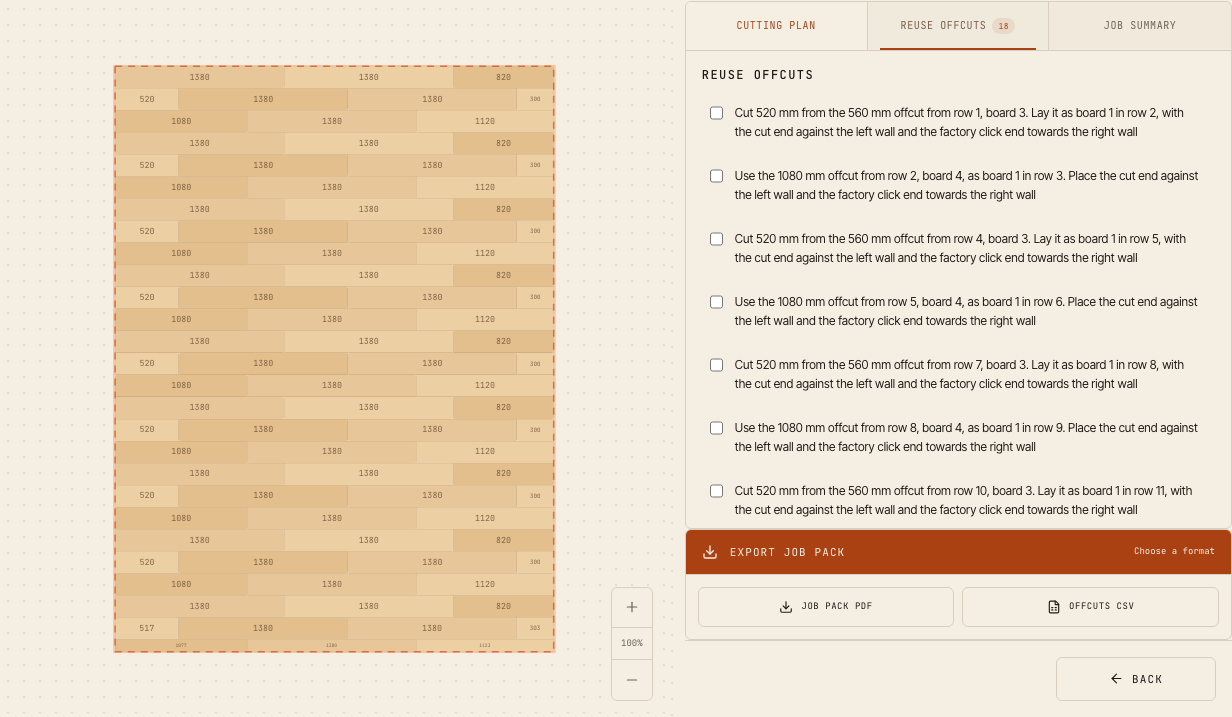
An offcut can become the first or last piece in a later row if its length and the end-joint stagger allow it. PlankBuddy shows where each piece comes from and which row uses it. Offcuts the plan does not use are reported as waste.
Work out the wastage when you lay the floor
To work out the wastage, first separate offcuts that are used later from material that is genuinely left over. PlankBuddy follows offcuts between rows and only counts a piece as waste when the finished plan does not use it.
How to cut unnecessary waste
- Compare both laying directions – see which way to lay laminate flooring.
- Plan the width of the first and last rows together.
- Reuse offcuts that meet the rules in later rows.
- Avoid short end pieces that break the manufacturer's minimum.
- Measure again before you cut.
The allowance and the calculated wastage are not the same
Don't use the planner's wastage figure as the only basis for your order. Pack size, colour sorting, damaged boards, future repairs and your supplier's advice all affect how much flooring to buy.
See also which laying rules affect the cuts.